Platelet-Rich Plasma Injections

Platelet Rich Plasma Knee Clinic

BACKGROUND

Platelet rich plasma, commonly called PRP, has been promoted widely as a potential treatment for helping injured musculoskeletal tissues to heal.  Platelet rich plasma contains high concentrations of several growth factors.   Platelet rich plasma has been used worldwide for multiple indications of knee pain, most commonly accelerate ligament healing or to augment tissue repair.  The mechanism of action of PRP is well understood, with ongoing research being done to further refine when and how PRP injections can be performed for maximal efficacy.  There are myriad ways in which PRP can help joint osteoarthritis, including the anabolic effects of the growth factors found within PRP.  There is a well-documented anti-inflammatory effect as well as cell proliferation and scaffolding to help create tissue remodeling.  PRP has also been found to improve tissue stiffness, making cartilage more resilient to future wear and tear.

The philosophy behind using platelet rich plasma to augment tissue healing is based upon growth factors that are present in an individual’s own blood.  Platelets naturally gravitate toward an injured area of the body and the alpha granules, which contain the growth factors, are released by the platelets.  For platelet rich plasma, blood is drawn from a patient and the platelets are spun down with a centrifuge to much higher levels than are normally seen in a person’s own blood.  These concentrated platelets are then injected into the injured or surgically repaired area.

Over the last few years, platelet rich plasma has emerged as an accessible and relatively inexpensive source of growth factors to treat musculoskeletal injuries.  PRP contains growth factors that are very important for musculoskeletal healing, such as TGF-beta, platelet-derived growth factor (PDGF) insulin-like growth factor (IGF-I) in fibroblast growth factor (FGF).  The growth factor concentration in platelets, coupled with the normal platelets that are present in blood, are sufficient to yield increases of measurable growth factors in the blood to help reduce knee pain.  Laboratory studies have confirmed that PRP has beneficial effects on ligament fibroblast migration and the differentiation and production of collagen.  This means that it assists with healing knee pain.  In addition to the effects of the growth factors directly on healing, platelet rich plasma has also been reported to enhance the gene expression of important healing factors.

The future of PRP is encouraging.  Using the patient’s own growth factors and platelets is cost effective and research does indicate that it facilitates repairs in both basic science and animal models.  While ongoing studies are still required, it is widely believed that the use of biologic agents to enhance healing is the next major breakthrough in sports medicine for treating knee pain.
(Source: Steadman Phillipon Research Institute via drrobertlaprademd.com website).

OUR APPROACH TO PRP INJECTIONS

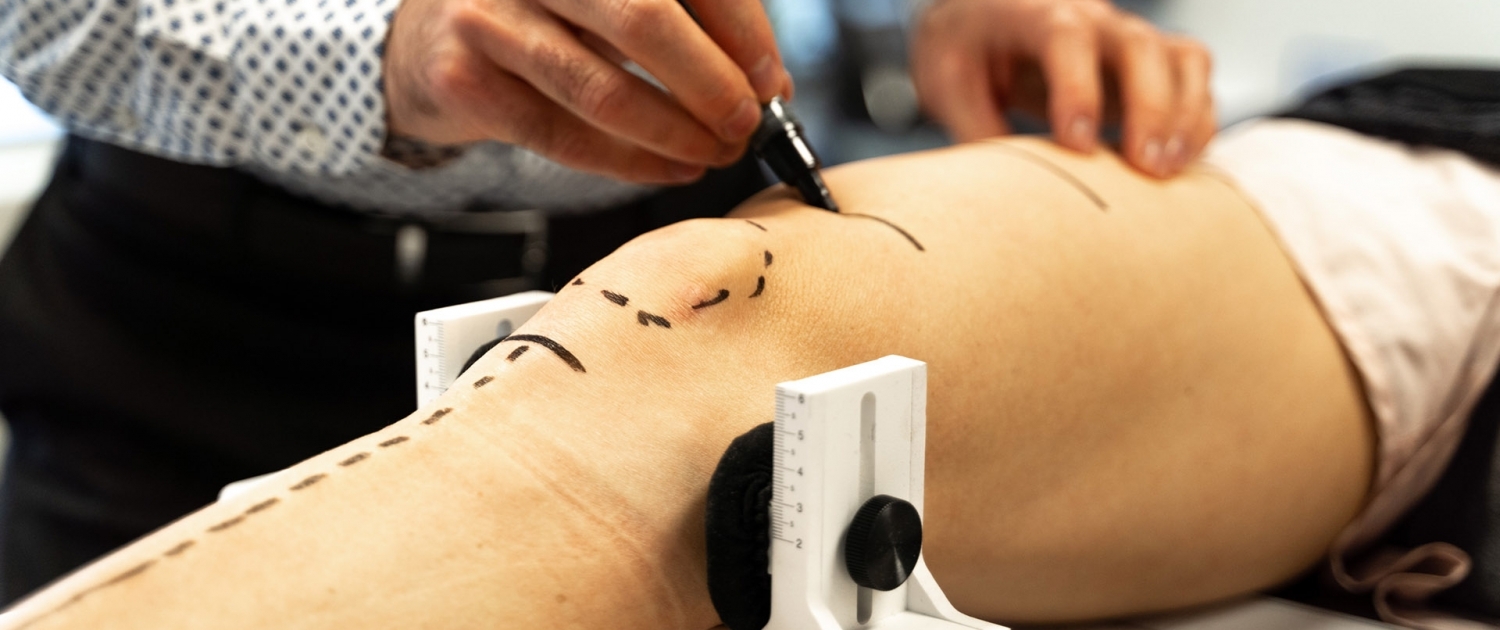
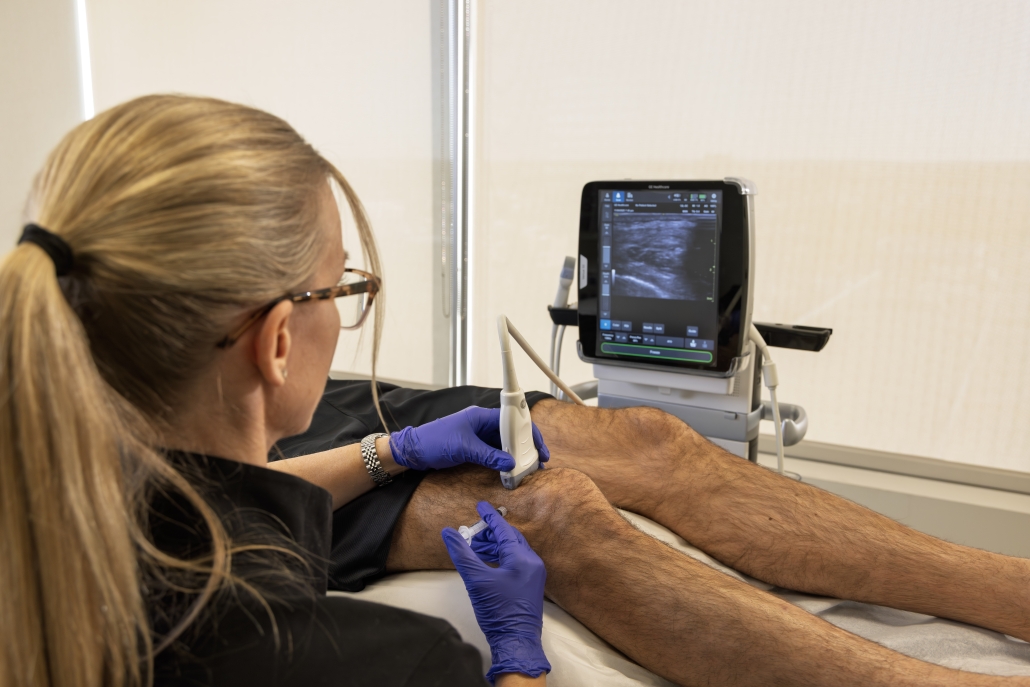
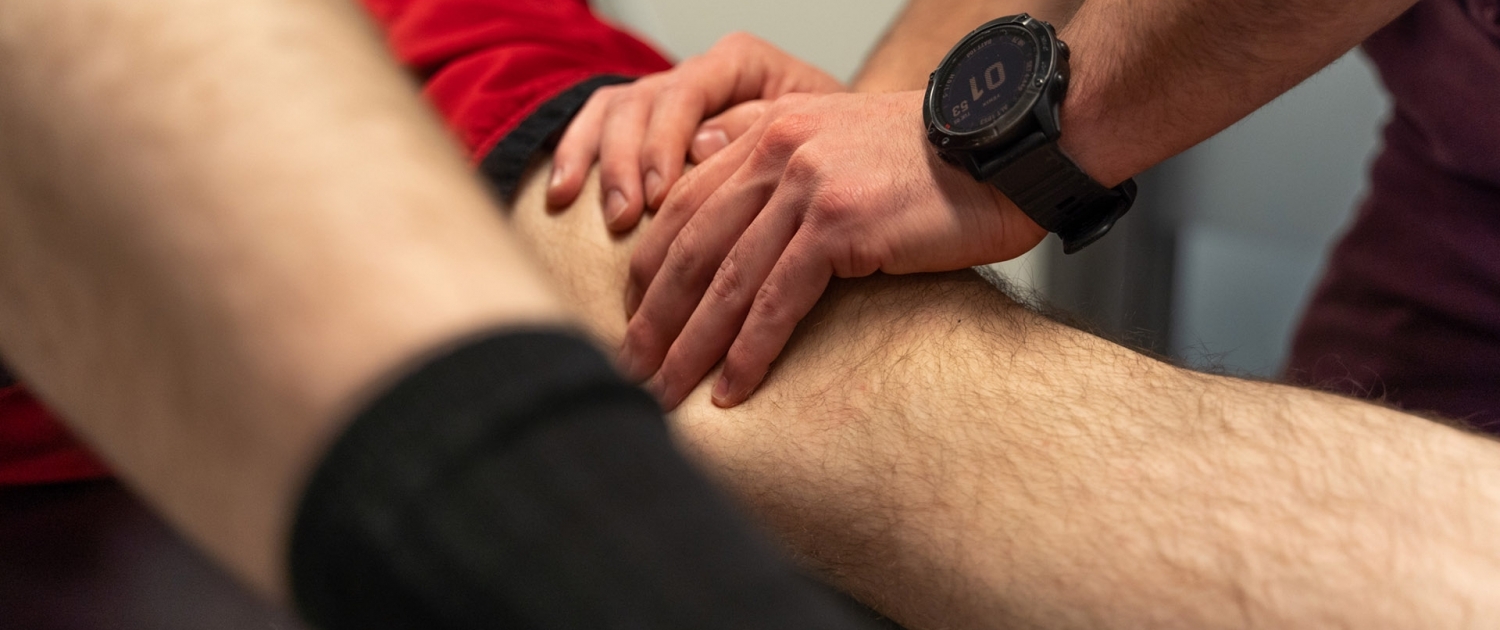
At our clinic, platelet-rich plasma is taken from your own blood and injected under image guidance to stimulate your body to heal itself.

HOW DO I PREPARE FOR MY PRP INJECTION APPOINTMENT

  • Avoid anti-inflammatories (ibuprofen, etc.) for 7 days prior to and two weeks after your injection (Tylenol is acceptable).
  • NO flying within 48 hours of receiving a PRP injection.
  • NO Cortisone injections within 4 weeks of a scheduled PRP injection.
  • Do not stop taking low-dose aspirin if prescribed by your doctor.
  • You are encouraged to have a small snack one hour before your exam.
  • Hydrate well prior to your PRP appointment.
  • Wear comfortable clothing.

WHAT HAPPENS DURING MY INJECTION APPOINTMENT?

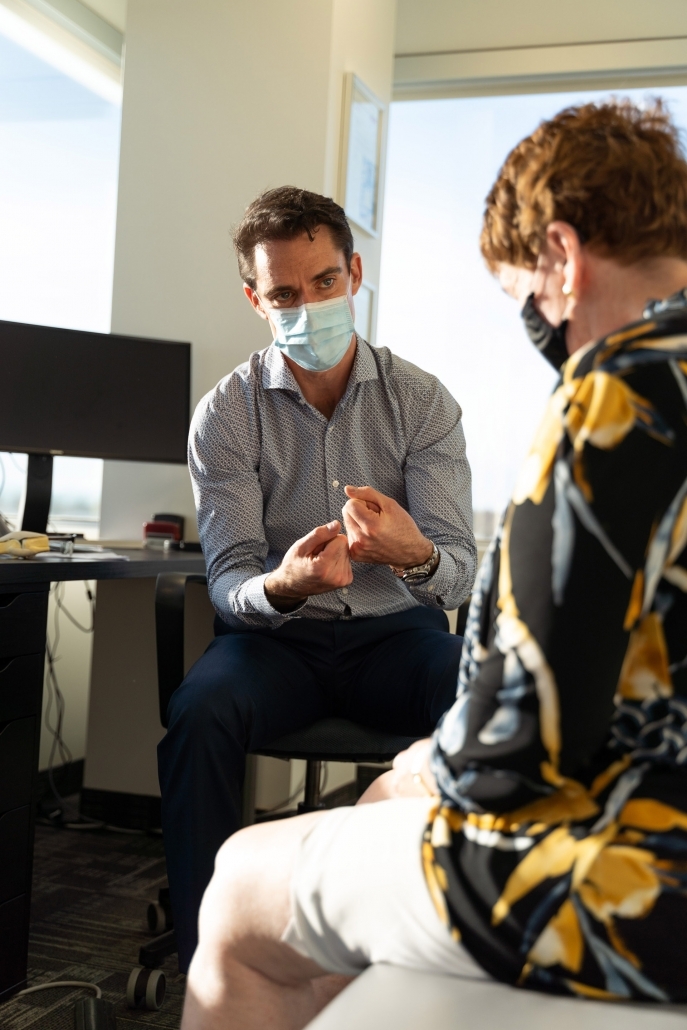
  • The practitioner will go over your consent form, explain the procedure and answer any questions you may have.
  • We will take 60 millilitres of blood from your arm to prepare the PRP.
  • The sample is placed in a centrifuge and spun to separate the platelets from the rest of the blood components.
  • This process may take several minutes
  • The practitioner will bring you into the treatment room and position you on the table where the skin will be cleaned.
  • Using ultrasound guidance, the practitioner will then inject the platelet-rich blood into the affected area using a sterile needle.

POST-INJECTION INSTRUCTIONS

  • Please rest the injected joint or tendon for the rest of the day after your injection.
  • Avoid strenuous activity or physiotherapy for at least five days following your injection with a gradual return to activity. Please be aware of your pain and stop if it hurts too much.
  • If you are going to physiotherapy, please advise your physiotherapist that you have had this injection so they can modify your exercises if necessary.
  • If possible, please avoid anti-inflammatory medication for two weeks (such as ibuprofen – Advil). It may interfere with the effectiveness of your injection.

WHEN WILL I SEE RESULTS?

Results from early healing are not typically appreciated until at least one month after the procedure, although healing and repair continue over 12 months. Some patients get complete relief that is permanent, while others have no significant effect. If an injection does not help relieve your pain, then you may need further evaluation.

HOW MUCH WILL IT COST?

Our clinical approach includes two injections, spread approximately six weeks apart.  Each injection costs $1284 and is typically eligible for some level of coverage through your private insurance plan.  We can provide you with a prescription and support documentation to provide to your insurance company.

PRP AFTER-CARE INSTRUCTIONS

PAIN RELIEF

Do NOT expect an immediate response to treatment as your body’s own healing response may take up to 2-3 weeks to fully develop. It is common to experience some tenderness or aching after the injections for up 7-10 days, though 1-3 days is more common. The initial inflammatory reaction created by the treatment may last 2 weeks with healing beginning afterwards. If you are experiencing pain we suggest using Tylenol (acetaminophen) and ice. Ice packs are the most useful method of controlling discomfort and swelling after injections. This is particularly important in the first 1-2 days after treatment. Ice wrapped in plastic (or other barrier) should be applied to the area of injection on/off for 15 minutes at a time (not more) as much as needed over the 2 days following injection. ONLY Tylenol can be used to further reduce pain. An inexpensive and convenient ice pack is a large bag of frozen peas or corn, which can be refrozen for reuse. Heat should not be applied during this time. After this initial 2-day period, ice packs can be used depending on your need. Avoid all other pain relief medications as these drugs will interfere with the healing process. Some common examples of such drugs are: Aspirin/ASA, Ibuprofen, Advil, naproxen, Aleve, Midol, Voltaren, Celebrex, diclofenac, prednisone/steroids. Curcumin is also included in this category. If in doubt call the clinic to inquire.

EXERCISE

There is very little down-time after prolotherapy or PRP. It is recommended that you keep to light activity for the first 2- 3 days after a treatment and slowly work your way back up to full activity over the following 2-3 weeks after treatment. As healing progresses, exercises to strengthen the muscles around the joint may be helpful when recovering from an injury. Exercise increases synovial fluid within the joint, keeping joint surfaces smooth and well-lubricated. Walking, swimming, elliptical trainer, yoga and qi gong are activities that will keep joints functioning optimally with minimal impact. Stay within your comfort zone to avoid injury and don’t over-stretch as this can aggravate injured ligaments and tendons. Avoid any exercises that cause pain.

If you have received an injection under your knee cap (subpatellar) then we ask that you keep the injected leg elevated (parallel to the floor) for 24 hours. During this time, we ask that you minimize any movements that keep you standing unless using the washroom, going to the kitchen or changing rooms.

INFECTION

We ask that you keep an adhesive bandage (e.g. Band Aid) over the needle site for 3 days after treatment to allow the skin to heal over and further protect the joint from infection. Also, during the initial 3 days after treatment please avoid pools, hot tubs, spas, bathtubs or soaking in any other tub of water. This allows the skin to heal after treatment and further reduces the risk of infection. You may shower as you like after treatment.

Also, please monitor yourself for infection and call us immediately if you notice any:

  1. Persistent swelling, pain or redness in the treated area.
  2. Reduced range of motion with an accompanying increase in pain.
  3. If you generally feel unwell or feverish after an injection.
  4. Notice shortness of breath, hives or itching.
  5. Any other unexpected side-effects from your treatment.

NUTRITION

Good nutrition is essential for healing and maintaining strong joints. Some basic guidelines after treatment include focus on protein (beef, chicken, lamb, fish, wild meats, eggs), vegetables, fruit and good quality fats (olive oil, avocado oil, coconut oil, sesame oil, clarified butter/ghee, fish oils) during the two months after treatment. Avoiding fast/junk food, fried foods, milk, margarine, soft drinks and minimizing baked goods (bread, buns, cookies, cakes, crackers, pizza, bagels, pita, etc.) also help ensure a stronger healing response.

SUPPLEMENTS

We encourage patients to use the following products for, at least, 2-3 months post injection as they supply the nutrients necessary to rebuild your joint and optimize the effect of the PRP treatment:

  • Arthroben: 1 scoop/day
  • Stellar C: 1 capsule 2x/day
  • Joint Soothe: 1 capsule 2x/day

ALCOHOL

Avoid alcohol as it may interfere with pain medications and slows the healing response.

SMOKING

Smoking will delay healing by prolonging the initial inflammatory response from PRP so we ask that you limit smoking as much as possible.

ADDITIONAL INFORMATION

Please don’t hesitate to contact us here or by phoning us at 403-457-KNEE for more information or to book an appointment.